Hit enter to search or ESC to close
27 November 2025
In the expansive realm of modern industrial manufacturing, precision, material integrity, and cost-efficiency stand as paramount pillars. Among the multitude of fabrication techniques, hot roll forming emerges as a foundational process, delivering unparalleled advantages for producing complex, high-strength metal profiles. This method fundamentally reshapes heated metal sheets or strips by passing them through a series of contoured rollers. Unlike its cold counterpart, hot roll forming operates above the recrystallization temperature of the metal, significantly enhancing ductility and reducing the material's yield strength. This elevated temperature permits greater deformation with less force, making it ideal for creating intricate geometries, large cross-sections, and parts from high-strength low-alloy (HSLA) steels or advanced high-strength steels (AHSS) that would be difficult or impossible to form cold. The resultant components exhibit superior metallurgical properties, including reduced residual stresses, uniform grain structure, and enhanced formability in subsequent operations. Industries from automotive and construction to aerospace and railway infrastructure heavily rely on hot roll forming to achieve structural integrity, optimize weight, and extend product lifespan. For instance, in automotive manufacturing, hot roll formed components contribute directly to vehicle safety through stronger chassis elements, leading to a substantial 15-20% improvement in crash energy absorption compared to traditional stamped parts. This technological cornerstone not only drives innovation in product design but also offers substantial economic benefits, including material savings of up to 10-12% due to precise shaping and reduced scrap, coupled with production speeds that can exceed 100 meters per minute for certain profiles. Understanding its intricacies is crucial for any enterprise aiming for manufacturing excellence and competitive advantage in today's demanding market.
The efficacy and precision of contemporary hot roll forming operations are a testament to decades of engineering innovation, integrating advanced metallurgical science with sophisticated mechanical and control systems. At its core, the process relies on a meticulously engineered sequence of roller stands, each designed to progressively shape the heated metal into the desired profile. Modern hot roll forming lines feature state-of-the-art induction heating systems or continuous furnaces, ensuring precise and uniform temperature distribution across the material. This thermal control is critical; deviations can lead to inconsistent material properties, dimensional inaccuracies, and increased internal stresses. For example, maintaining steel at an optimal range of 900-1100°C ensures maximum ductility and minimizes spring-back. Beyond heating, the design and material selection of the rolling dies themselves are paramount. These dies, often crafted from robust tool steels and sometimes coated with wear-resistant ceramics, must withstand extreme temperatures and pressures while maintaining exacting tolerances. Advanced CAD/CAM software is now indispensable for simulating material flow, predicting deformation patterns, and optimizing roll design, thereby reducing the need for costly physical prototypes. Furthermore, integrating real-time process monitoring, utilizing laser profilometers and infrared cameras, allows for instantaneous adjustments to roll gaps and speeds. This ensures that dimensional accuracy is maintained within tight specifications, often achieving tolerances of ±0.1mm for critical dimensions. The automation level has also soared, with robotic handling systems and sophisticated PLC controls managing material feeding, alignment, and finished part collection, contributing to a remarkable increase in production throughput—some lines can process up to 20 tons of material per hour, a 25% increase over previous generations. This combination of thermal precision, advanced tooling, digital simulation, and automation not only elevates product quality but also significantly lowers operational costs by optimizing material usage and minimizing post-forming rework.
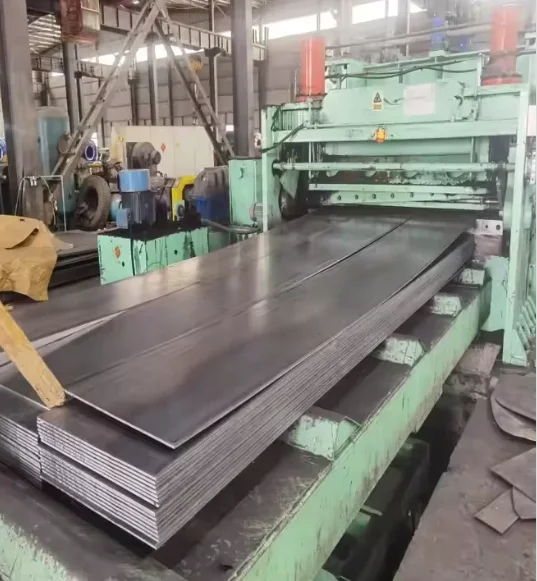
Selecting the right hot roll forming manufacturer is a critical decision that profoundly impacts product quality, production efficiency, and overall project cost. The landscape of hot roll forming technology is populated by several key players, each bringing distinct strengths in terms of technical capabilities, material expertise, and service offerings. Evaluating these manufacturers requires a comprehensive assessment of factors such as their maximum forming capacity, achievable precision, range of material compatibility, investment in research and development, and post-sales support. For instance, some manufacturers specialize in high-volume production for automotive components, boasting rapid changeover times and robust automation, while others might focus on niche markets requiring extreme precision for aerospace or unique structural profiles for construction. A manufacturer's ability to handle diverse material types, from standard carbon steels to specialized alloys like titanium or high-strength aluminum, also indicates their technological prowess. Furthermore, a strong R&D department suggests an ongoing commitment to innovation, translating into access to the latest forming techniques and material processing advancements. To illustrate these differences, consider a hypothetical comparison:
Feature | Manufacturer A (Specialist in Automotive) | Manufacturer B (General Industrial Profiles) | Manufacturer C (Niche & High-Precision) |
Max. Material Thickness | 15 mm | 10 mm | 8 mm |
Achievable Tolerance (Width) | ±0.15 mm | ±0.25 mm | ±0.08 mm |
Production Speed (Max) | 120 m/min | 80 m/min | 60 m/min |
Material Compatibility | HSLA, AHSS, Carbon Steels | Carbon Steels, Stainless Steel | Titanium, Inconel, Specialized Alloys |
R&D Investment Level | High (Focus: Lightweighting) | Medium (Focus: Process Optimization) | Very High (Focus: New Material Processing) |
Post-Sales Support | Global, 24/7 Remote Diagnostics | Regional, Standard Service Contracts | Dedicated Project Engineers, On-site Training |
This comparison highlights that while Manufacturer A offers high volume and good general precision, Manufacturer C excels in specialized, extremely precise applications, albeit potentially at a lower production speed. The choice ultimately depends on the specific project requirements, balancing factors like material, tolerance, volume, and budget. Partnering with a manufacturer whose core competencies align precisely with project needs can lead to significant cost reductions and superior product outcomes, potentially reducing overall manufacturing lead times by 20-30%.
The true strength of modern hot roll forming technology lies not just in its inherent capabilities, but in its remarkable adaptability to bespoke requirements. Customization is a cornerstone of this advanced manufacturing process, allowing engineers and designers to realize complex profiles that precisely meet unique application demands. This journey begins with an in-depth collaboration between the client and the manufacturer's engineering team, often leveraging sophisticated design software. Using advanced CAD/CAM tools, specific part geometries are translated into detailed roll designs, with simulations predicting material behavior under various temperature and pressure conditions. Finite Element Analysis (FEA) is commonly employed to model stress distribution, spring-back, and potential defects before any physical tooling is produced, significantly de-risking the development phase and reducing iteration cycles by up to 40%. Whether it's a unique cross-sectional shape for an automotive crash box, a specialized track profile for railway systems, or a custom structural beam for architectural masterpieces, hot roll forming can be configured to produce it. This involves designing bespoke rolling stands, adjusting the number and sequence of passes, and fine-tuning the heating parameters. Beyond geometry, customization extends to material selection and post-forming treatments. Manufacturers often work with clients to specify particular steel grades, alloys, or even tailor heat treatment cycles to achieve desired mechanical properties such as enhanced yield strength, improved ductility, or superior fatigue resistance. For instance, a bespoke quenching and tempering process immediately after forming can significantly alter the microstructure of the steel, increasing its strength by 10-15% while maintaining formability. The ability to integrate secondary operations directly into the roll forming line, such as punching, notching, or laser cutting, further enhances customization, delivering near-net-shape components that minimize subsequent machining and assembly, thereby reducing overall production costs by 5-10% and accelerating time-to-market for highly specialized products.
The widespread adoption of hot roll forming technology across various heavy industries underscores its versatility and critical importance in creating robust, lightweight, and high-performance components. Its ability to produce complex cross-sections with excellent material properties makes it indispensable for applications where structural integrity and precise dimensions are paramount. In the automotive industry, hot roll formed profiles are fundamental to modern vehicle safety and efficiency. Components like A and B pillars, roof rails, bumper beams, and chassis cross-members are often hot roll formed from advanced high-strength steels (AHSS). These parts significantly improve crashworthiness by absorbing impact energy more effectively while simultaneously contributing to vehicle lightweighting, which can reduce fuel consumption by up to 5-7%. For example, an AHSS bumper beam can be 30% lighter than its conventional steel counterpart while offering superior impact resistance. The construction sector also benefits immensely, utilizing hot roll formed beams, columns, and purlins for pre-engineered buildings, bridges, and infrastructure projects. The high strength-to-weight ratio allows for longer spans and lighter support structures, translating into faster construction times—up to 20% quicker for large-scale projects—and reduced material costs. In railway systems, hot roll formed rails, wagon components, and specialized track elements ensure durability and safety under extreme loads and environmental conditions. The uniform grain structure imparted by the hot forming process enhances fatigue resistance, extending the operational life of critical railway infrastructure by years. The agricultural machinery sector relies on these profiles for durable frame components and specialized implements that must withstand harsh operating environments. Even in the demanding aerospace industry, though less common for primary structures due to extremely tight tolerances and exotic materials, specialized hot roll forming applications exist for certain support frames or internal structural elements. The diverse range of applications, each benefiting from enhanced material properties, reduced weight, and optimized costs, solidifies hot roll forming's position as a cornerstone of advanced manufacturing, continually evolving to meet new engineering challenges and delivering quantifiable improvements in product performance and lifecycle.
Achieving optimal results in hot roll forming extends beyond merely selecting the right equipment and materials; it necessitates adherence to a suite of best practices throughout the entire manufacturing workflow. The foundation of efficiency lies in meticulous material selection and preparation. Collaborating with steel mills to ensure consistent material properties, surface quality, and dimensional accuracy of the incoming coil stock is crucial. Pre-treatment processes, such as descaling, might be necessary to prevent surface defects and ensure uniform heating. Next, precise temperature control during heating is paramount. Utilizing advanced pyrometers and intelligent feedback loops to maintain the material within its optimal forming window minimizes internal stresses and ensures consistent mechanical properties. Deviations of even 20-30°C from the ideal temperature can significantly impact ductility and final part quality. Optimized roll design and tooling maintenance are equally vital. Rolls must be engineered to guide the material progressively without excessive slippage or localized stress, and they require regular inspection and re-grinding to prevent wear that could lead to dimensional inaccuracies or surface imperfections. A worn roll can lead to a 5-10% increase in scrap rates. Integrating real-time process monitoring and control systems offers invaluable benefits. Sensors tracking temperature, speed, tension, and profile dimensions allow for immediate adjustments, preventing defects before they become significant and reducing the need for costly post-forming corrections. Predictive maintenance schedules for equipment, based on sensor data and operational hours, minimize unplanned downtime, which can save thousands of dollars per hour in lost production. Furthermore, establishing rigorous quality control protocols, including periodic sampling, dimensional checks using laser scanners, and metallurgical analysis, ensures that every component meets the required specifications. Implementing these best practices not only enhances the quality and consistency of hot roll formed products but also drives significant improvements in operational efficiency, typically reducing scrap rates by 10-15% and boosting overall production throughput by ensuring continuous, defect-free operation.
The journey of hot roll forming is far from complete; it continues to evolve at a rapid pace, driven by demand for lighter, stronger, and more sustainably produced components. The future landscape of hot roll forming is characterized by several transformative trends aimed at enhancing precision, expanding material capabilities, and integrating smart manufacturing principles. One significant area of innovation is the development of even more sophisticated heating technologies. Advances in inductive heating, including multi-zone control and adaptive heating profiles, promise greater energy efficiency—potentially reducing energy consumption by 15-20%—and more precise temperature uniformity, crucial for processing new generations of advanced high-strength steels and novel alloys with narrower forming windows. Furthermore, the integration of Artificial Intelligence (AI) and Machine Learning (ML) is set to revolutionize process control. AI algorithms can analyze vast datasets from sensors, predict potential defects, and autonomously optimize roll forming parameters in real-time, leading to unprecedented levels of accuracy (e.g., reducing tolerance variations by an additional 20-25%) and minimal human intervention. This also extends to predictive maintenance, where AI can forecast equipment failures before they occur, drastically reducing downtime. Another frontier is the ability to process an even broader array of advanced materials. Researchers are exploring hot roll forming of ultra-high-strength steels, lightweight magnesium alloys, and even complex multi-material composites, opening new design possibilities for aerospace, defense, and electric vehicle applications. Environmental sustainability is also a key driver. Future hot roll forming lines will likely incorporate more energy-efficient designs, waste heat recovery systems, and processes optimized for circular economy principles, minimizing material waste and energy footprint. The convergence of these technological advancements – from smarter heating and AI-driven control to expanded material processing and sustainable operations – solidifies hot roll forming's role as a cornerstone technology. It will continue to empower industries to push the boundaries of design and performance, ensuring its enduring relevance in the increasingly complex world of advanced manufacturing.
Hot roll forming is a metal forming process where metal sheets or strips are heated above their recrystallization temperature and then progressively shaped by passing them through a series of contoured rolls. This process enhances ductility, reduces forming forces, and allows for the creation of complex profiles with superior material properties.
The primary difference is the temperature at which the metal is processed. Hot roll forming occurs above the recrystallization temperature, making the metal more ductile and easier to form, resulting in less residual stress and a more uniform grain structure. Cold roll forming is done at room temperature, offering tighter tolerances and better surface finish, but requiring higher forming forces and being more limited in profile complexity and material thickness.
Key advantages include the ability to form complex profiles and large cross-sections from high-strength materials, reduced forming forces, minimized residual stresses, improved material ductility, uniform microstructure, and enhanced mechanical properties. It's also cost-effective for high-volume production.
Hot roll forming is predominantly used for various steel grades, including carbon steels, high-strength low-alloy (HSLA) steels, advanced high-strength steels (AHSS), and some stainless steels. Specialized applications may also involve nickel-based alloys and, less commonly, titanium.
Major industries include automotive (chassis components, bumper beams, pillars), construction (structural beams, purlins, panels), railway (rails, wagon components), agricultural machinery, and heavy equipment manufacturing.
Typical dimensional tolerances for hot roll forming range from ±0.1mm to ±0.5mm, depending on the material thickness, profile complexity, and specific equipment used. While generally less precise than cold roll forming, modern techniques and monitoring systems are continuously improving accuracy.
Future advancements include more precise and energy-efficient induction heating systems, greater integration of AI and Machine Learning for real-time process optimization and predictive maintenance, the capability to process new advanced materials like ultra-high-strength alloys and composites, and a focus on sustainable manufacturing practices such as waste heat recovery and optimized material utilization.