Hit enter to search or ESC to close
28 October 2026
THE BUYER'S GUIDE / SELECTION
Procurement teams evaluating high strength steel plate for structural, infrastructure or industrial projects often face a straightforward but consequential decision: which grade — Q355, Q420 or Q460 — matches the load requirements, welding process and service environment of their application? This guide walks through the key selection criteria drawn from confirmed product specifications for these low-alloy, high-strength structural plates, and explains where each grade is most applicable so buyers can align procurement to design requirements with confidence.
Minimum yield strength required by the structural design: Q355 (355 MPa min.), Q420 (420 MPa min.) or Q460 (460 MPa min.) should be matched against the design load envelope without substitution unless confirmed by the engineering team.
Weldability and fabrication process compatibility: all three grades are engineered for welded structures with optimized chemical composition, but fabricators must verify their welding procedure specification covers the chosen grade, particularly as yield strength and carbon equivalent increase from Q355 to Q460.
Corrosion resistance and service environment: the series carries a high industrial-grade corrosion resistance rating and mill-finish hot-rolled surface; buyers with marine, chemical or elevated-temperature service conditions should verify whether additional treatment or a different alloy class is required.
Application category alignment: confirmed uses are petroleum storage tanks, high-pressure vessels, shipbuilding, bridge construction, commercial building frames and boilers; applications outside these categories require individual verification against the confirmed parameter set.
Sub-grade suffix selection (B, C, D or M): sub-grades govern impact toughness temperature ratings and thermomechanical rolling conditions, and the correct suffix must be specified to satisfy the applicable structural or engineering standard.
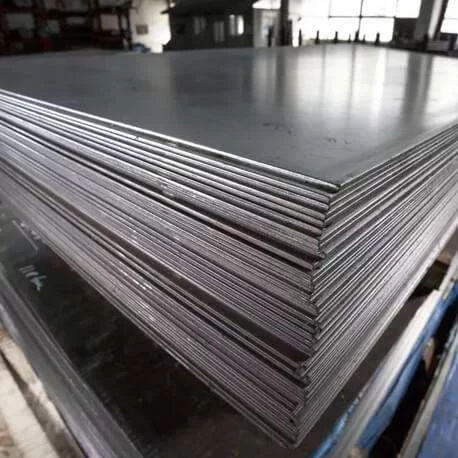
High strength steel plate refers to a category of low-alloy, high-strength (LAHS) structural steel produced through a hot-rolling process to achieve medium-thick plate dimensions. Within the Q355–Q460 series, each designation represents a minimum yield strength threshold — Q355 at 355 MPa, Q420 at 420 MPa and Q460 at 460 MPa — providing a graduated range of mechanical performance for engineers and procurement teams to match against design loads.
These grades collectively serve as the modern industrial successor to the older Q345 standard, offering updated strength and reliability metrics while preserving the excellent weldability and toughness that make structural plates practical to fabricate on-site or in the workshop.
Xingtai Baidy Steel Works Co., Ltd. supplies the following grades of high strength steel plate as medium-thick hot-rolled plates:
| Steel Grade | Yield Strength (Min.) | Material Type | Manufacturing Process |
|---|---|---|---|
| Q355B/C/D | 355 MPa | Low Alloy High-Strength Steel | Hot Rolled / Medium Thick Plate |
| Q420MB/C/D | 420 MPa | Low Alloy High-Strength Steel | Hot Rolled / Medium Thick Plate |
| Q460MB/C/D | 460 MPa | Low Alloy High-Strength Steel | Hot Rolled / Medium Thick Plate |
The letter suffixes (B, C, D, M) denote impact toughness sub-grades and thermomechanical rolling conditions. Buyers should confirm the exact sub-grade against their structural or engineering standard requirements.
The most direct criterion is the yield strength demanded by the structural calculation or design code. Q355 covers many general heavy-load welded structures; Q420 and Q460 provide progressively higher strength for applications where weight savings matter or where extreme stress concentrations are present. No grade should be substituted for another without verifying the design load envelope.
All three grades are specifically engineered for welded structures, with an optimized chemical composition that allows seamless, high-strength welded joints. However, as yield strength increases from Q355 to Q460, carbon equivalent values and preheat requirements may differ. Fabricators should confirm their welding procedure specification (WPS) accommodates the chosen grade before finalizing procurement.
The Q355–Q460 series is rated at a high industrial-grade corrosion resistance level, extending service life in harsh outdoor and industrial environments. For especially aggressive environments — marine exposure, chemical exposure or elevated temperature — buyers should verify whether additional surface treatment or a different alloy class is warranted. Mill finish / hot-rolled surface is the standard delivery condition for these plates.
Confirmed application areas for this high strength steel plate series include:
Buyers whose application does not fall into these categories should verify fit against the material's confirmed parameter set rather than assuming suitability.
Compared with standard structural steel, high strength steel plate in the Q355–Q460 series typically offers lower long-term maintenance costs due to its extended corrosion resistance and load capacity. Initial material costs may be higher, but lifecycle analysis often favors the higher-grade option for critical structures. Price is not guaranteed here; buyers should request current quotations for their specific dimensions and quantities.
| Feature | Standard Structural Steel | High Strength Q355–Q460 Series |
|---|---|---|
| Yield Strength | Basic / Moderate | Superior (355 MPa and above) |
| Weld Performance | Standard | Excellent / High-Efficiency |
| Lifespan | Medium | Extended (High Corrosion Resistance) |
| Load Capacity | Standard | Heavy-Duty / Extreme Stress |
| Project Cost | Lower Initial Cost | Lower Long-Term Maintenance |
This comparison is drawn directly from confirmed product documentation. It does not constitute a guarantee of performance for any specific project.
Procurement teams familiar with older Chinese national standards will encounter Q345 in legacy specifications. The Q355 grade is the recognized modern replacement for Q345 under updated Chinese steel standards, offering equivalent or improved strength and reliability metrics. When re-ordering materials originally specified as Q345, buyers should confirm with their engineering team that Q355 is an accepted substitution under the applicable design code.
Before finalizing a purchase order for high strength steel plate, consider each of the following:
Running through this checklist reduces the risk of grade mismatches that create rework, delays or structural non-conformance after delivery.
Xingtai Baidy Steel Works Co., Ltd. is a steel export enterprise with 18 years of industry experience and long-term cooperative relationships with multiple domestic steel mills. The company supplies a wide range of hot-rolled and cold-rolled steel products and offers processing services including welding and cutting. For application-specific inquiries or to confirm available dimensions and sub-grades, contact Xingtai Baidy Steel Works Co., Ltd. directly.
THE PEOPLE

About the author
THE COMPANY
We are a foreign trade enterprise specializing in steel export, and have been deeply engaged in the industry for 18 years, accumulating rich experience and abundant resources. We have a professional team composed of industry elites, who are not only proficient in all kinds of knowledge of steel and familiar with the rules of international trade, but also have keen market insight and excellent communication skills.…
YOUR NEXT STEP
Use case, specification, quantity and delivery window: make the next conversation specific.