In the vast landscape of industrial metallurgy, mild steel sheet metal stands as one of the most versatile and indispensable materials used in modern construction and manufacturing. Characterized by its low carbon content, this material offers a unique balance of malleability and strength, making it the primary choice for everything from automotive body panels to large-scale architectural frameworks. Understanding its properties is not just a matter of technical specification, but a critical factor in ensuring the structural integrity and cost-effectiveness of global infrastructure projects.
From a global economic perspective, the demand for low-carbon steel remains a cornerstone of industrial growth. As cities expand and the need for rapid urbanization increases, the ability to source and fabricate mild steel sheet metal efficiently allows engineers to build safer, more sustainable structures without the prohibitive costs associated with high-alloy alternatives. It bridges the gap between raw strength and workable flexibility, facilitating innovation across diverse sectors.
However, selecting the right grade of steel—such as the high-strength Q355—is essential to overcome challenges like corrosion and fatigue. By mastering the application of these materials, industries can optimize their production cycles and reduce waste. This guide explores the depth of mild steel's utility, its technical advantages, and how it continues to evolve in an era of green manufacturing and digital automation.

Global Relevance of Mild Steel Sheet Metal
The global reliance on mild steel sheet metal is evidenced by its sheer volume in world trade and construction. According to industry standards aligned with ISO guidelines, the ability to mass-produce low-carbon steel sheets has revolutionized the automotive and shipbuilding industries, allowing for rapid prototyping and assembly. Its prevalence is not merely due to availability, but because it serves as the baseline for most secondary steel processing.
Despite its ubiquity, the industry faces the constant challenge of balancing raw strength with environmental impact. The shift toward higher-yield variants, such as Q355, allows for thinner sheets to carry heavier loads, reducing the overall weight of structures while maintaining safety. This evolution is crucial for reducing the carbon footprint of global logistics and construction.
Definition and Industrial Significance
At its core, mild steel sheet metal is a type of low-carbon steel, typically containing between 0.05% and 0.25% carbon. This specific chemical composition ensures that the metal remains ductile, meaning it can be bent, rolled, and shaped without fracturing, yet it retains enough strength to support significant loads once fabricated into a structural component.
In the context of modern industry, this material is more than just a commodity; it is a facilitator of humanitarian and economic progress. From the creation of affordable housing modules to the fabrication of essential medical equipment housings, the ease of welding and machining mild steel allows for the rapid deployment of critical infrastructure in developing regions.
Furthermore, its integration into the "Circular Economy" is a major advantage. Unlike many composite materials, mild steel is 100% recyclable without losing its intrinsic properties. This makes it an essential component for companies striving to meet ESG (Environmental, Social, and Governance) goals while maintaining industrial output.
Key Factors for Material Selection
When specifying mild steel sheet metal for a project, durability is the foremost consideration. The interaction between the carbon content and the alloying elements determines how the steel will react to stress and environmental exposure, which is why engineers often look toward high-strength options like Q355 for welded structures.
Cost efficiency is another critical pillar. The widespread availability of mild steel sheet metal reduces procurement lead times and lowers the total cost of ownership. Its ability to be easily coated with galvanization or paint further extends its lifespan, providing an economical solution for long-term infrastructure.
Lastly, weldability and formability ensure that the material can be scaled to fit complex designs. Whether it is for shipbuilding steel or automotive structures, the predictability of how mild steel behaves under heat and pressure allows for precise automation in the factory, reducing human error and increasing safety.
Performance Metrics and Scalability
Measuring the success of mild steel sheet metal involves analyzing its yield strength versus its ductility. For high-load applications, the transition from standard mild steel to low-alloy variants like Q355 provides a significant jump in load-bearing capacity without sacrificing the ability to weld the components together.
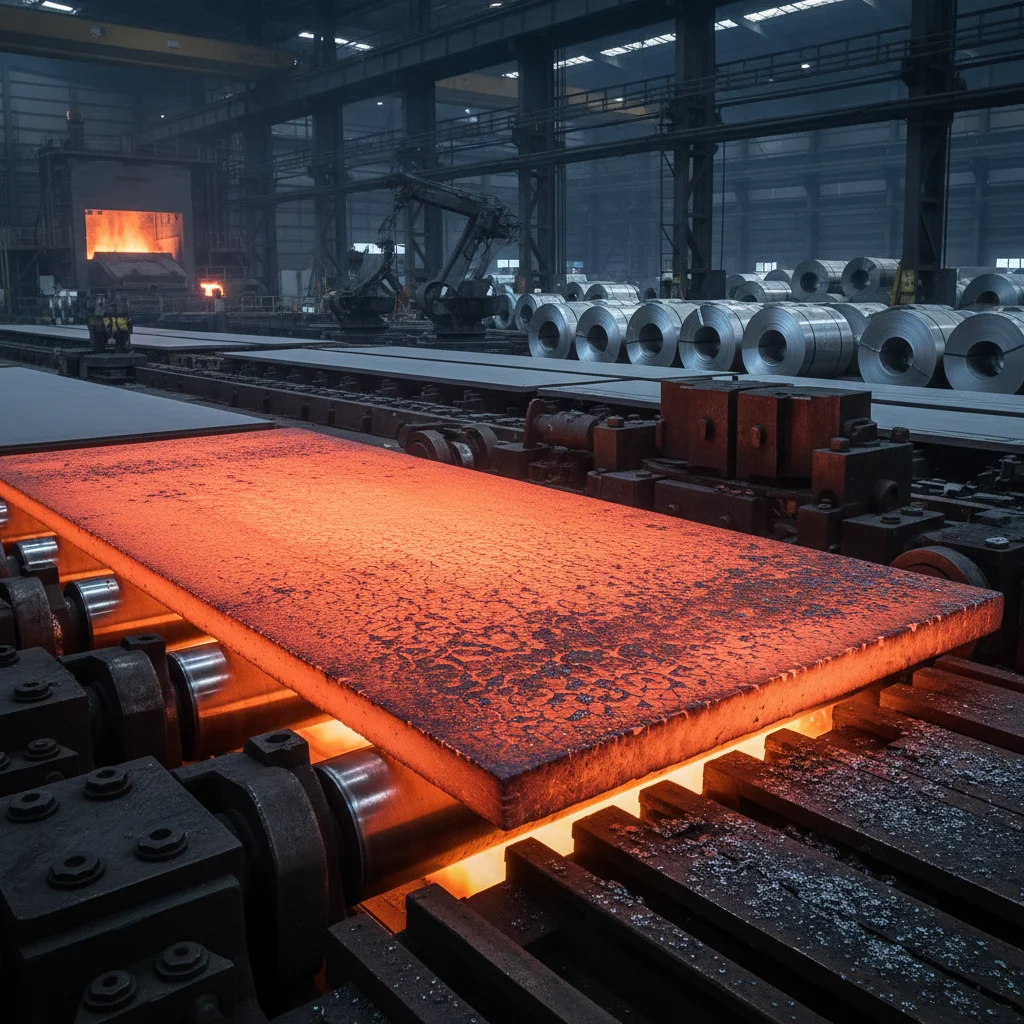
Scalability in production is achieved through optimized rolling processes. By controlling the thickness and surface finish, manufacturers can produce sheets that meet the stringent requirements of different industries, from the thin gauges used in appliance housings to the heavy plates used in pressure vessels and boilers.
Performance Comparison of Mild Steel Variants
Global Applications and Use Cases
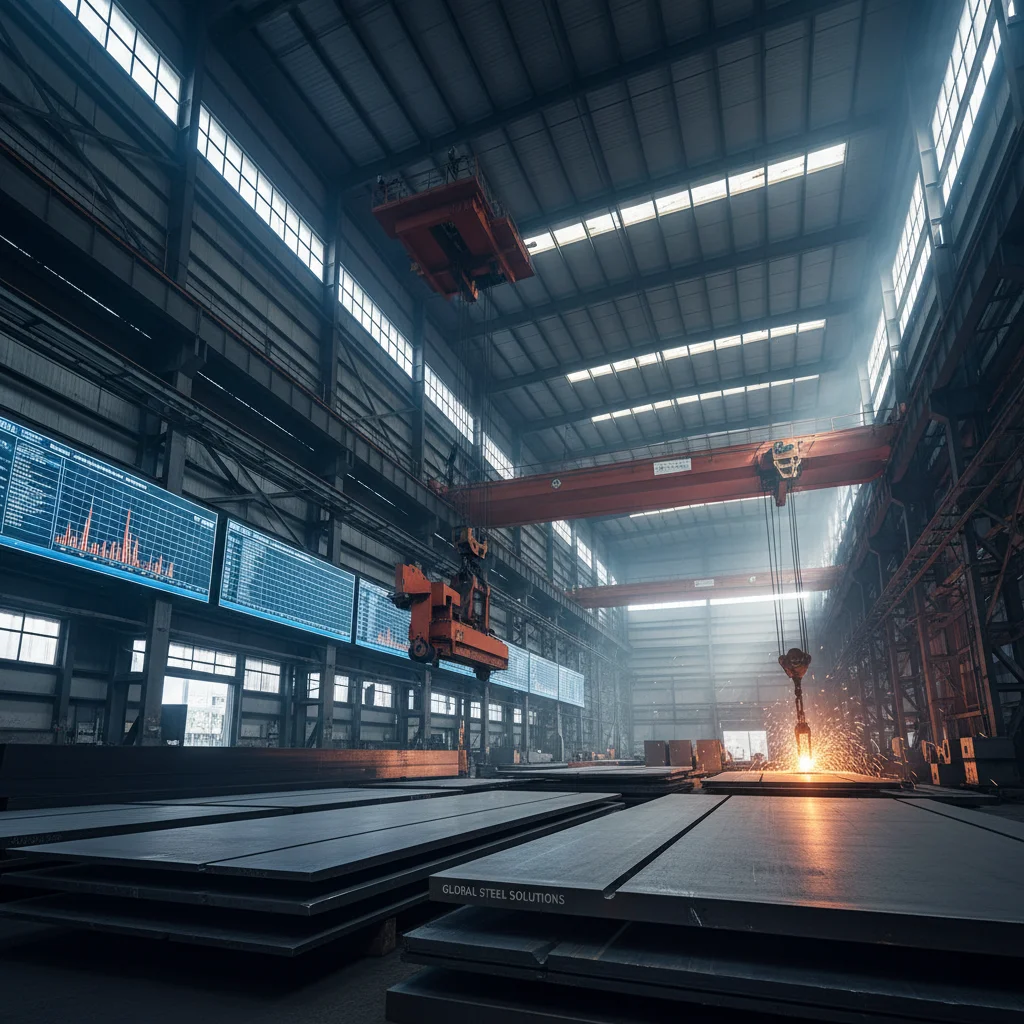
In the realm of heavy industry, mild steel sheet metal is the backbone of shipping and energy. In shipyards, it is used for hull plating and internal bulkheads, where its weldability ensures watertight seals and structural rigidity. Similarly, in the energy sector, it is fabricated into large-scale petroleum storage tanks and high-pressure vessels, often utilizing the enhanced properties of Q355 to withstand extreme internal pressures.
Beyond heavy industry, we see this material in the most urgent humanitarian contexts. In post-disaster relief operations, modular housing made from galvanized mild steel sheets provides rapid, durable shelter for displaced populations. These units are cost-effective to ship and assemble, offering dignity and safety in remote industrial zones or crisis-hit regions.
Long-term Value and Sustainability
The long-term value of mild steel sheet metal extends beyond its initial purchase price. Its reliability in structural applications reduces the frequency of replacement, while its ability to be refurbished—through sanding, repainting, or re-galvanizing—ensures a lifecycle that can span decades. This longevity is a key logical driver for architects and city planners.
From an emotional and social angle, the use of high-grade steel fosters trust in the built environment. Knowing that a bridge or a high-rise building is supported by certified structural steel plate provides a sense of security. The innovation in steel manufacturing also means that we can now achieve complex, organic architectural forms that were previously impossible, blending art with engineering.
Sustainability is now the primary driver of innovation. The industry is moving toward "Green Steel," utilizing hydrogen-based reduction instead of coking coal. Because mild steel sheet metal is so easily recycled, it remains the most viable candidate for a zero-waste industrial future.
Future Trends in Steel Fabrication
The future of mild steel sheet metal is being shaped by the digital transformation of the factory floor. The integration of AI-driven precision cutting and robotic welding is minimizing material waste and increasing the speed of production. We are seeing a shift toward "Industry 4.0," where every sheet of steel can be traced from the furnace to the final installation.
Moreover, the development of nano-coatings is addressing the age-old problem of corrosion. Future iterations of mild steel will likely feature integrated anti-corrosive layers at the molecular level, eliminating the need for secondary painting and further reducing environmental toxins.
Finally, the synergy between mild steel and additive manufacturing (3D printing) is opening new doors. Hybrid fabrication, where a mild steel sheet serves as the base for 3D-printed complex geometries, is allowing for the creation of ultra-lightweight yet high-strength components for the aerospace and automotive sectors.
Comparison of Mild Steel Grades and Application Suitability
| Steel Grade | Key Mechanical Property | Primary Use Case | Durability Score (1-10) |
|---|
| ASTM A36 | High Ductility | General Construction | 7 |
| Q355 Low Alloy | High Yield Strength | Bridges & Pressure Vessels | 9 |
| Cold Rolled | Smooth Surface Finish | Automotive Interior | 6 |
| Galvanized | Corrosion Resistance | Outdoor Roofing | 8 |
| Hot Rolled | Structural Bulk | Industrial Frameworks | 7 |
| Q235 | Excellent Weldability | General Fabrication | 7 |
FAQS
The primary difference lies in the yield strength and alloy composition. While standard mild steel is highly ductile and easy to form, Q355 is a low-alloy steel designed to support much heavier loads and resist deformation. This makes Q355 superior for welded structures that must bear heavy stress, such as bridge supports or pressure vessels, whereas standard mild steel is better for general-purpose fabrication.
Yes, because of its iron content, mild steel is susceptible to oxidation (rust) when exposed to moisture and oxygen. This is typically prevented through surface treatments. The most common methods include galvanization (coating with zinc), powder coating, or painting. For high-humidity environments, using galvanized mild steel sheet metal is the most effective long-term solution.
Absolutely. Mild steel is widely used in automotive structures due to its energy-absorbing properties, which are critical for crash safety. By using cold-rolled sheets, manufacturers can achieve a high strength-to-weight ratio and a smooth finish for body panels. In high-stress areas of the chassis, higher-strength variants are often employed to ensure driver safety.
Thickness selection depends on the intended load, the fabrication method, and the environment. For decorative or interior panels, thin-gauge cold-rolled steel is sufficient. For structural supports, heavy-duty hot-rolled plates are required. We recommend consulting a structural engineer to calculate the required yield point and selecting a grade like Q355 if the structure must support significant weight.
Yes, mild steel is one of the most sustainable materials available because it is infinitely recyclable. Unlike plastics or some composites, steel can be melted down and repurposed without losing its strength. Furthermore, the industry's shift toward electric arc furnaces (EAF) and hydrogen reduction is significantly lowering the carbon footprint associated with its production.
Mild steel has a lower carbon equivalent and lacks the complex chromium and nickel alloys found in stainless steel. This results in a more stable weld pool and a lower risk of cracking or warping during the cooling process. This ease of welding makes mild steel sheet metal far more cost-effective for large-scale industrial fabrication.
Conclusion
In summary, mild steel sheet metal remains an unparalleled pillar of the global manufacturing sector. Its unique combination of ductility, weldability, and cost-effectiveness allows it to serve a vast array of applications, from the delicate curves of an automobile to the massive scale of a shipbuilding project. By integrating higher-strength grades like Q355 and adopting sustainable production methods, the industry continues to provide the essential building blocks for a safer and more efficient world.
Looking forward, the integration of smart fabrication and green metallurgy will only enhance the value of this material. For businesses and engineers, the key to success lies in selecting the precise grade and coating for their specific environmental challenges. We encourage you to explore the latest advancements in structural steel to optimize your next project for both performance and sustainability. Visit our website: www.baidysteel.com