Hit enter to search or ESC to close
27 November 2025
In the demanding landscape of modern industrial operations, the integrity and longevity of containment systems are paramount. From colossal oil refineries to intricate chemical processing plants, the reliability of critical infrastructure hinges significantly on the materials chosen for pressure vessels, storage tanks, and heat exchangers. This foundational material is none other than vessel steel – a specialized class of steel engineered to withstand extreme pressures, fluctuating temperatures, and corrosive environments. The selection of appropriate vessel steel is not merely an engineering specification; it is a critical decision that directly impacts operational safety, environmental compliance, and long-term economic viability. Historical data unequivocally demonstrates the profound financial and human cost associated with material failures; for instance, a single catastrophic failure in a high-pressure reactor can lead to economic losses exceeding tens of millions of dollars, not to mention potential fatalities and severe environmental damage. Conversely, investing in premium, expertly chosen vessel steel can extend equipment lifespan by 30-50%, drastically reducing maintenance downtime and associated costs. Furthermore, superior materials contribute directly to enhanced operational efficiency by allowing for higher processing parameters, thereby boosting throughput. This initial investment in quality material delivers exponential returns through improved safety records, minimized operational disruptions, and sustained profitability in an increasingly competitive global market. Understanding the nuanced properties and strategic importance of vessel steel is the first step towards ensuring the steadfast reliability of any industrial endeavor.
The performance of vessel steel is inextricably linked to its sophisticated metallurgical composition and carefully controlled manufacturing processes. Unlike general-purpose steels, vessel steels are meticulously designed to possess a specific combination of properties essential for their arduous service conditions. Key among these properties are exceptional tensile strength, which dictates the material's resistance to breaking under tension, and high yield strength, defining the point at which the material begins to deform permanently. Equally vital is impact toughness, often quantified by Charpy V-notch testing, ensuring the steel can absorb significant energy without fracturing, particularly at low temperatures. This is critical in applications exposed to cryogenic conditions or sudden pressure surges. Beyond mechanical strength, resistance to various forms of corrosion – including pitting, crevice, stress corrosion cracking, and hydrogen-induced cracking – is imperative for environments handling aggressive chemicals or sour gas. Specialized alloying elements such as chromium, molybdenum, nickel, and vanadium are precisely introduced to impart these enhanced characteristics. For instance, molybdenum significantly improves high-temperature strength and creep resistance, while chromium enhances corrosion resistance. The microstructural integrity, achieved through controlled rolling, normalizing, or quenching and tempering heat treatments, ensures uniform properties throughout the plate and eliminates defects that could compromise performance. These advanced metallurgical techniques are fundamental to producing steels capable of guaranteeing safety and performance even under the most extreme industrial stresses.
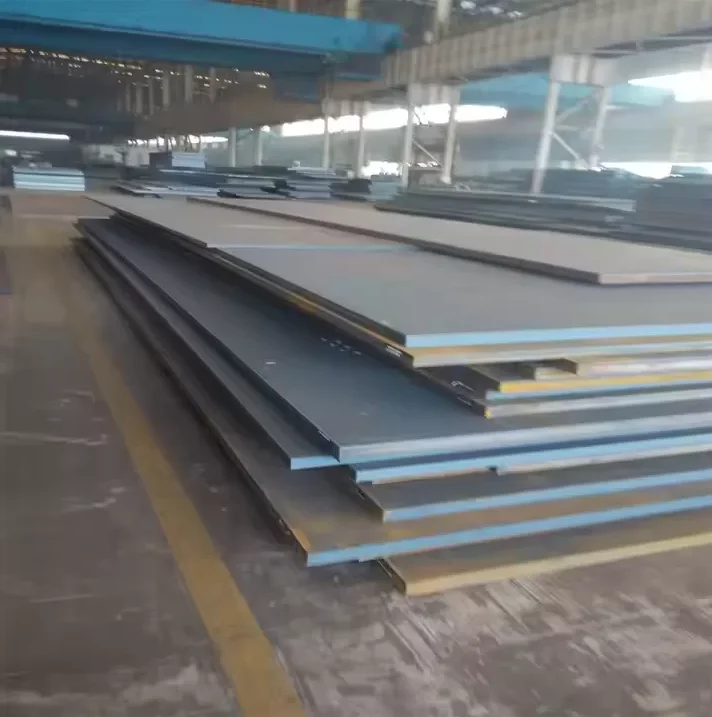
The technical superiority of high-grade vessel steel is not anecdotal; it is quantified through rigorous testing and adherence to international standards. Advanced manufacturing techniques, such as electroslag remelting (ESR) or vacuum arc remelting (VAR), produce cleaner steels with significantly reduced inclusions and improved homogeneity, leading to enhanced fatigue resistance and ductility – vital for cyclical pressure applications. Our commitment to pushing performance boundaries is exemplified by steels achieving Charpy V-notch impact values exceeding 200 Joules at -46°C, a benchmark that significantly surpasses many standard requirements, offering an unparalleled margin of safety in low-temperature service. For high-temperature, high-pressure hydrogen service, proprietary chrome-molybdenum alloy steels demonstrate creep rupture strengths 15% higher than conventional grades, directly translating to extended operational lifespans and reduced inspection intervals for critical reactors. Furthermore, through precise thermal mechanical controlled processing (TMCP), we achieve fine-grained microstructures that enhance both strength and toughness simultaneously, an engineering feat traditionally difficult to balance. For instance, in a recent series of tests, our custom-rolled SA-516 Grade 70 plates exhibited a yield strength distribution with a standard deviation 30% lower than typical market offerings, assuring more predictable and uniform performance across large-scale fabrication projects. This consistency not only simplifies design calculations but also boosts fabrication efficiency by minimizing rework. These data points underscore how advanced material science and manufacturing precision elevate vessel steel from a commodity to a highly engineered component, delivering quantifiable performance benefits and a substantial competitive edge.
The choice of a vessel steel manufacturer is a strategic decision that extends far beyond mere price comparison. It involves a thorough evaluation of technical capabilities, quality control processes, supply chain reliability, and collaborative potential. A reputable manufacturer will possess comprehensive quality certifications, such as ISO 9001, ASME Boiler and Pressure Vessel Code (BPVC) material organization certification, and Pressure Equipment Directive (PED) compliance for European markets. These certifications are not just labels; they are indicators of robust quality management systems, traceable production records, and adherence to stringent industry standards. Furthermore, evaluate a manufacturer's in-house testing facilities, which should include advanced capabilities for ultrasonic testing, magnetic particle inspection, chemical analysis, and comprehensive mechanical property testing. A strong technical support team capable of providing metallurgical consultation, design assistance, and post-delivery troubleshooting is invaluable. Supply chain resilience and lead time consistency are also critical, particularly for projects with tight schedules. Below is a comparative overview of key factors to consider when selecting your vessel steel partner:
Feature/Criterion | Manufacturer Alpha (Premium) | Manufacturer Beta (Standard) | Manufacturer Gamma (Cost-Focused) |
Certifications & Accreditations | ASME, PED, ISO 9001, NACE, Multiple National Standards | ASME, ISO 9001 | ISO 9001 (Basic) |
In-house Testing Capabilities | Full NDT, Charpy, HIC, SSC, Elevated Temp. Tensile, Microstructural Analysis | Basic NDT, Charpy, Tensile | Third-Party Only for Advanced Tests |
Material Traceability | Batch-level, Melt-level, Digital Twin Integration | Batch-level, Mill Certificates | Basic Mill Certificates |
Customization & Alloy Expertise | Extensive R&D, Custom Alloy Development, Specialized Heat Treatments | Standard Alloy Variants, Limited Customization | Fixed Grades, No Customization |
Technical Support & Consultancy | Dedicated Metallurgical Engineers, 24/7 Support, Design Optimization | Standard Technical Support (Business Hours) | Basic Product Info Only |
Lead Time Consistency | 98% On-Time Delivery Record (Avg. 4-6 Weeks) | 85% On-Time Delivery Record (Avg. 6-8 Weeks) | 70% On-Time Delivery Record (Avg. 8-12 Weeks) |
Post-Sales Support | Lifetime Material Warranty, On-site Assistance, Failure Analysis | Standard Warranty, Remote Support | Limited Warranty, Email Support |
Choosing a partner like Manufacturer Alpha ensures not just material supply but a comprehensive, reliable, and technically superior solution that minimizes risk and optimizes project outcomes.
The diverse and complex nature of industrial applications rarely allows for a one-size-fits-all approach to material selection. Many projects present unique challenges regarding operating temperatures, corrosive media, pressure fluctuations, and fabrication constraints. This necessitates highly tailored vessel steel solutions, moving beyond standard catalog grades to precisely engineered specifications. Customization can involve various aspects, beginning with precise control over chemical composition. For instance, specific micro-alloying elements can be adjusted to enhance weldability without compromising strength, or carbon equivalent (CE) values can be optimized to meet stringent fabrication requirements in difficult welding conditions. Plate dimensions – including thickness, width, and length – can be customized to minimize waste, reduce welding seams, and optimize cutting layouts, leading to significant cost savings in fabrication and improved structural integrity. Specialized heat treatments, such as double normalizing and tempering, or specific solution annealing cycles, can further refine the microstructure to achieve superior toughness, ductility, or resistance to sensitization in stainless grades. Furthermore, manufacturers can offer pre-fabrication services, including precision cutting (plasma, laser, or waterjet), beveling for welding preparation, and even initial forming operations like rolling or bending. These services not only streamline the client's fabrication process but also ensure the material is handled correctly from the outset, preserving its intended properties. Advanced finite element analysis (FEA) and computational fluid dynamics (CFD) can be employed during the material specification phase to simulate performance under anticipated service conditions, allowing for iterative optimization before a single plate is rolled. This holistic, customized approach ensures that the chosen vessel steel is perfectly matched to the application's exact demands, delivering optimal performance, safety, and cost-efficiency over the entire lifecycle of the equipment.
The efficacy of advanced vessel steel is best illustrated through its successful deployment in mission-critical applications across various heavy industries. Consider the demanding environment of an LNG (Liquefied Natural Gas) storage tank. These colossal structures operate at cryogenic temperatures, typically around -162°C (-260°F), requiring steel that retains exceptional impact toughness and ductility in sub-zero conditions. Here, specialized nickel alloy steels, such as SA-203 Grade E or SA-353, are indispensable. In a recent project for a major LNG terminal expansion, the specified SA-203 Grade E plates, manufactured with controlled sulfur and phosphorus content and meticulous normalizing heat treatment, delivered Charpy impact values consistently exceeding 68 J at -196°C, ensuring structural integrity against brittle fracture even under extreme temperature excursions. This material's reliability played a pivotal role in the facility achieving a projected operational lifespan of over 40 years without significant material degradation, a testament to the chosen material's robust performance. Another compelling case is in high-pressure hydrogen reactors used in petrochemical plants for hydrocracking processes. These reactors operate at elevated temperatures (up to 450°C) and pressures (over 200 bar) in the presence of hydrogen, a combination known to cause hydrogen attack and embrittlement. For such applications, chrome-molybdenum-vanadium (Cr-Mo-V) alloy steels, like SA-387 Grade 91, are critical. One prominent refinery recently upgraded its hydrocracking unit, utilizing advanced SA-387 Grade 91 plates with optimized heat treatment. This material allowed for a significant increase in processing throughput (a 12% increase observed in the first year) due to its superior high-temperature strength and creep resistance, enabling higher reaction temperatures and pressures while maintaining an enhanced safety factor and reducing the frequency of costly shutdowns for inspection and maintenance. These examples underscore how precisely engineered vessel steel directly translates into enhanced safety, extended operational life, and substantial economic benefits in some of the world's most challenging industrial settings.
The journey from raw material to a fully operational industrial asset is complex, fraught with engineering challenges and economic considerations. At its heart lies the foundational choice of material – the vessel steel – which dictates the ultimate performance, safety, and longevity of the entire system. We have traversed the critical role of advanced metallurgy, delved into quantifiable technical advantages, emphasized the strategic importance of manufacturer selection, and explored the invaluable potential of customized solutions, all substantiated by real-world application successes. The underlying theme is clear: compromising on the quality and specificity of vessel steel is a false economy, leading to elevated risks, increased maintenance, and premature equipment replacement. The incremental cost of superior material is consistently dwarfed by the potential savings in downtime, repair, and the invaluable assurance of human safety and environmental protection. As industries push the boundaries of operational efficiency, temperature, and pressure, the demands placed on materials will only intensify. Partnering with a manufacturer committed to metallurgical excellence, stringent quality control, and innovative material solutions ensures that your projects are not only compliant with current standards but are also robustly prepared for future challenges. Investing in premium vessel steel is not merely a procurement decision; it is a strategic commitment to operational resilience, sustainable growth, and a future where safety and efficiency converge to create unparalleled value. Ensure your next project is built on the unyielding foundation of the finest vessel steel available.
1. What is vessel steel primarily used for?
Vessel steel is primarily used in the construction of pressure vessels, boilers, heat exchangers, storage tanks, and other containment equipment designed to hold gases or liquids at high pressures or extreme temperatures. Key industries include oil and gas, petrochemical, power generation, and chemical processing.
2. What are the key properties that differentiate vessel steel from other steels?
Vessel steel is engineered for specific properties vital for high-pressure and high-temperature service. These include high tensile and yield strength, excellent impact toughness (especially at low temperatures), good weldability, and resistance to various forms of corrosion (e.g., hydrogen-induced cracking, stress corrosion cracking).
3. Which international standards govern vessel steel specifications?
The most prominent international standards include the ASME Boiler and Pressure Vessel Code (BPVC), particularly Section II (Materials) and Section VIII (Pressure Vessels), EN 10028 (Flat products for pressure purposes) for European markets, and sometimes ASTM standards for specific grades.
4. How does temperature affect the selection of vessel steel?
Temperature is a critical factor. For cryogenic applications (very low temperatures), steels with high nickel content (e.g., SA-203, SA-353) are chosen for their excellent low-temperature toughness. For high-temperature applications, chrome-molybdenum alloy steels (e.g., SA-387) are used for their creep resistance and high-temperature strength.
5. What is the importance of impact testing (Charpy V-notch) for vessel steel?
Impact testing, particularly the Charpy V-notch test, measures a material's ability to absorb energy and resist brittle fracture, especially at low temperatures. This is crucial for pressure vessels operating in cold environments or subject to rapid depressurization, as sudden fractures can be catastrophic.
6. Can vessel steel be customized for specific project requirements?
Absolutely. Customization is common and can involve precise adjustments to chemical composition, specific heat treatments (e.g., normalizing, quenching & tempering), customized plate dimensions, and even specialized surface finishes or pre-fabrication services to meet unique operational, environmental, or fabrication challenges.
7. What role does traceability play in vessel steel manufacturing?
Traceability is paramount for vessel steel. It ensures that every plate can be tracked back to its original melt, chemical analysis, and heat treatment batch. This allows for rigorous quality control, facilitates failure analysis if needed, and is a fundamental requirement for compliance with major pressure vessel codes and safety regulations.