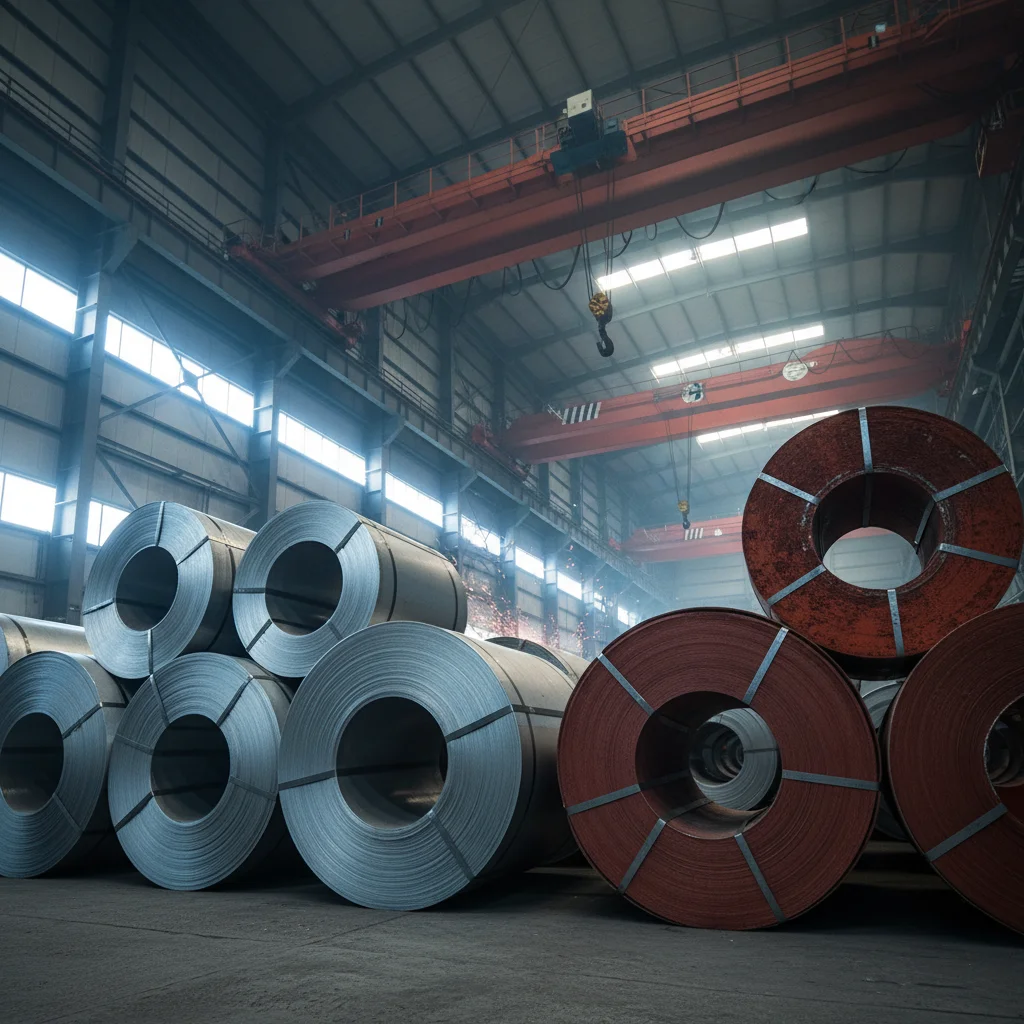
The global industrial landscape relies heavily on the structural integrity and versatility of steel, with hot rolled steel companies playing a pivotal role in supplying the foundational materials for modern civilization. From the soaring heights of urban skyscrapers to the intricate frames of heavy-duty vehicles, hot rolled steel provides the necessary balance of strength and cost-effectiveness that makes large-scale infrastructure viable.
Understanding the nuances of hot rolled production is essential for engineers and procurement specialists who must navigate a complex market of alloys and standards. By leveraging high-temperature processing, these companies are able to manipulate the internal grain structure of the metal, ensuring that materials like Q345 structural steel can withstand immense pressure while remaining malleable enough for complex fabrication.
For those seeking reliable partnerships, selecting the right hot rolled steel companies ensures that project specifications—such as yield strength and tensile limits—are met with precision, reducing long-term maintenance costs and enhancing structural safety across global construction projects.

Understanding Q345 Steel in Hot Rolled Production
Q345 is a cornerstone material for many hot rolled steel companies, categorized as a carbon alloy steel with a carbon content of less than 0.2%. This specific chemical composition allows the steel to maintain an excellent balance of overall performance, making it highly sought after for demanding applications in bridge construction, shipbuilding, and pressure vessel fabrication.
The nomenclature "Q345" is deeply technical; the "Q" represents the yield point (derived from the Chinese Pinyin "qu fu dian"), while "345" denotes a yield strength of approximately 345MPa. It is a critical detail for engineers to note that this yield value typically decreases as the thickness of the material increases, a characteristic that professional manufacturers meticulously document in their technical datasheets.
The Technical Specifications of Low Alloy Structural Steel
As a Chinese GB standard Low Alloy High Strength Structural Steel, Q345 is defined by its impressive material density of 7.85 g/cm3. When tested with 16mm diameter steel bars or plates, it exhibits a tensile strength ranging from 470 to 630 Mpa, ensuring that structures can withstand significant loading without permanent deformation.
According to the GB/T 1591 – 2008 standard, this material is further divided into five distinct quality grades: Q345A, Q345B, Q345C, Q345D, and Q345E. These grades allow engineers to select the specific variant that best suits the environmental conditions of the project, such as temperature resistance or impact toughness.
The production of these grades requires precise hot rolling techniques. By controlling the cooling process and the temperature of the rollers, manufacturers can ensure that the final carbon steel plate meets the exact dimensions required, with thickness options ranging from 0.1mm to 300mm and lengths extending up to 12m.
Performance Standards Across Hot Rolled Steel Companies
Consistency in material quality is what separates leading hot rolled steel companies from the rest of the market. Adherence to international standards such as AISI, ASTM, DIN, JIS, and EN ensures that a plate produced in one region can be seamlessly integrated into a global project without compromising safety or compatibility.
When evaluating hot rolled steel companies, the ability to provide a diverse range of materials is key. Beyond Q345, top-tier suppliers offer high-performance alloys such as Q390, Q420, Q460, and even specialized grades like Q890D or S690QL, which are essential for ultra-high-strength applications in modern engineering.
The versatility of these materials allows for the creation of components that reduce overall weight without sacrificing strength. For instance, using high-strength hot rolled plates in car girders, transmission shafts, and chassis parts significantly improves fuel efficiency by shedding unnecessary mass while maintaining crash-safety standards.
Operational Capacity and Production Efficiency
The capability of hot rolled steel companies is often measured by their infrastructure and annual output. A truly industrial-scale operation requires a comprehensive suite of production lines, including medium-thick plate lines and high-speed wire rod lines, to handle a variety of product forms and dimensions.
Advanced heat treatment, including quenching and tempering lines, allows for the precise modification of steel properties. This infrastructure enables a production capacity that can reach 10 million tons annually, positioning a manufacturer as a key regional production base capable of supporting national infrastructure goals.
Infrastructure Rating of Leading Hot Rolled Steel Companies
Global Applications of High-Strength Hot Rolled Plates
The practical application of hot rolled steel extends across virtually every sector of heavy industry. In the automotive sector, these materials are used for chassis and structural components to ensure durability under extreme stress. In the maritime industry, shipbuilding steel provides the necessary corrosion resistance and strength to withstand the harsh environment of the open ocean.
Beyond transport, hot rolled plates are the skeletal framework for bridges and large-scale buildings. The use of Q345 and its higher-grade counterparts allows for longer spans and taller structures, enabling architects to push the boundaries of design while maintaining absolute structural reliability.
Long-Term Value and Reliability in Steel Procurement
Choosing the right partner among various hot rolled steel companies is not just about the initial price point, but about the total lifecycle value of the material. Steel that is produced with strict adherence to GB, ASTM, or DIN standards reduces the risk of structural failure and lowers the cost of long-term maintenance.
Reliability is further enhanced when a company can provide a full range of services, from raw material production to customized dimensions. Whether it is a 0.1mm thin sheet or a 300mm thick heavy plate, the precision of the hot rolling process ensures that the final product arrives ready for immediate fabrication.
Moreover, the ability to source materials like 16MnL, 16MnR, or S690QL from a single trusted source streamlines the supply chain, reducing lead times and ensuring that all structural components of a project share a consistent metallurgical profile.
Future Trends in Sustainable Steel Manufacturing
The future for hot rolled steel companies lies in the intersection of digital transformation and green metallurgy. Automation in the rolling process is already reducing waste and increasing the precision of plate thickness, which minimizes the need for subsequent machining and reduces the overall carbon footprint of the production cycle.
Sustainability is also driving the development of higher-strength alloys. By producing steels with higher yield points (such as the Q690 or Q890 series), manufacturers enable the construction of projects that require less total material to achieve the same structural integrity, effectively reducing the environmental impact of mining and smelting.
As global policies shift toward carbon neutrality, the industry is exploring hydrogen-based reduction and electric arc furnaces to complement traditional hot rolling. This evolution ensures that the steel industry remains a viable pillar of global growth while aligning with international environmental standards.
Comparison of High-Strength Steel Grades for Structural Use
| Steel Grade |
Yield Strength (MPa) |
Primary Application |
Durability Rating (1-10) |
| Q345B |
345 |
General Bridges/Buildings |
8 |
| Q420E |
420 |
Heavy Duty Chassis |
9 |
| Q500D |
500 |
Pressure Vessels |
9 |
| Q690C |
690 |
High-Rise Structures |
10 |
| S690QL |
690 |
Specialized Machinery |
10 |
| Q890D |
890 |
Ultra-High Strength Parts |
10 |
FAQS
Q345 is a low alloy high strength structural steel defined by its yield point of 345MPa. Unlike standard carbon steels, it offers a superior balance of strength, weldability, and toughness, making it more suitable for complex structural parts like car girders and transmission shafts where weight reduction is required without sacrificing load-bearing capacity.
Quality grades (A, B, C, D, E) are managed through strict control of chemical composition and thermal processing according to GB/T 1591 – 2008. Higher grades typically offer better impact toughness at lower temperatures, achieved through precise quenching and tempering processes in the mill's heat treatment lines.
Yes, professional manufacturers offer wide ranges of customization. Typical dimensions include lengths from 4m to 12m, widths from 0.6m to 3m, and thicknesses from 0.1mm up to 300mm. Custom specifications are possible depending on the production line's capacity (e.g., 3500mm medium-thick plate lines).
To facilitate global trade and engineering safety, reputable companies adhere to a variety of standards including AISI and ASTM (USA), DIN (Germany), JIS (Japan), EN (European Union), and GB (China). This ensures that the material properties are verified and consistent regardless of the destination.
This is a natural metallurgical phenomenon in hot rolling. As thickness increases, the cooling rate of the center of the plate slows down compared to the surface, leading to a slightly coarser grain structure. This is why technical datasheets provide specific test data for standard thicknesses, such as 16mm.
Absolutely. Because of their high tensile strength (470-630 Mpa) and excellent overall performance, materials like Q345 and specialized alloy plates are widely used in shipbuilding, pressure vessels, and bridge construction to ensure maximum safety under high-pressure environments.
Conclusion
The role of hot rolled steel companies in the global supply chain is indispensable, providing the critical materials that enable modern infrastructure and transportation. By mastering the production of high-strength alloys like Q345 and maintaining rigorous adherence to international standards, these manufacturers ensure that everything from car chassis to massive bridges is built on a foundation of safety, durability, and efficiency.
As the industry moves toward a more sustainable and digitally integrated future, the focus will shift toward even higher-strength materials and greener production methods. For procurement officers and engineers, partnering with a manufacturer that combines massive production capacity with precise metallurgical control is the best strategy for ensuring project success. Visit our website for more information: www.baidysteel.com