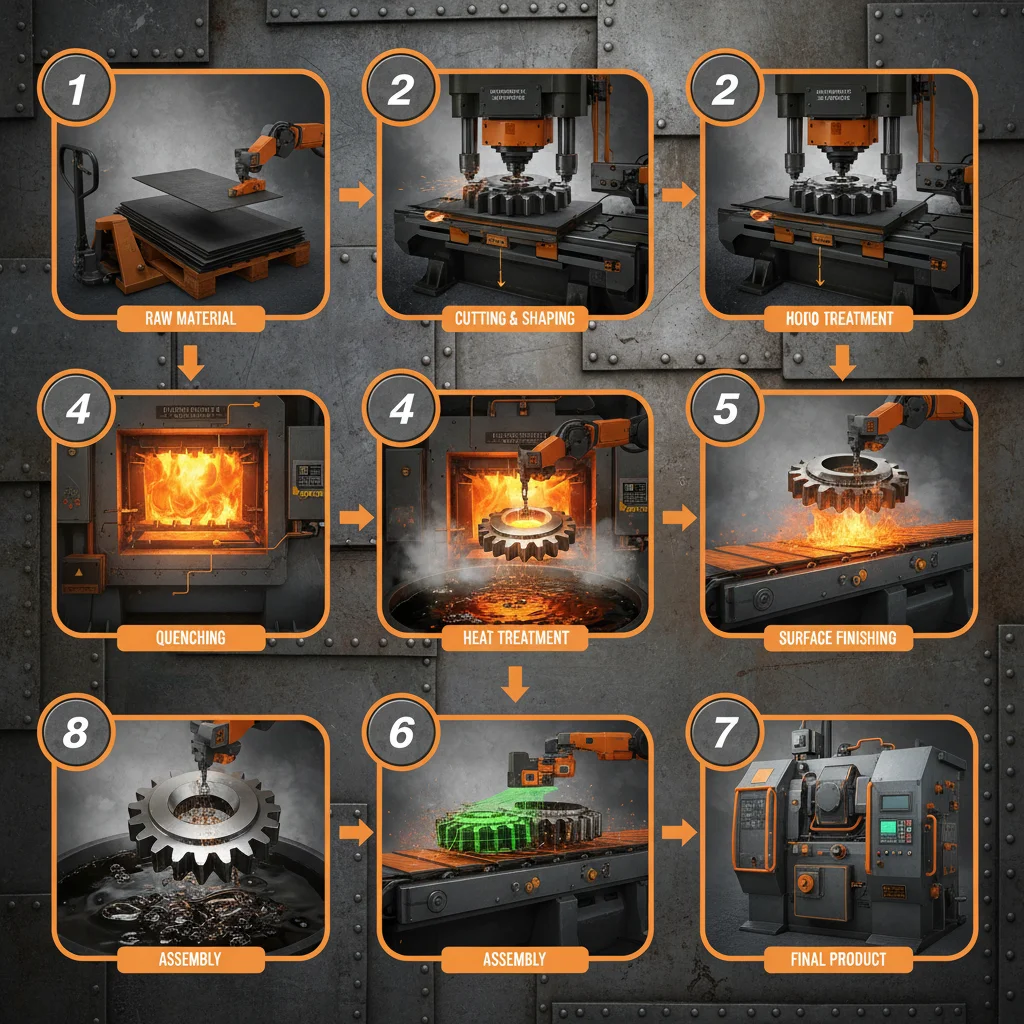
The global maritime industry relies heavily on the structural integrity of vessels to ensure safety and efficiency across the world's oceans. At the heart of this infrastructure is shipbuilding steel, a specialized class of materials engineered to withstand extreme hydrostatic pressure, corrosive saltwater environments, and the dynamic stresses of heavy cargo transport.
Selecting the right grade of steel is not merely a matter of procurement but a critical engineering decision. High-tensile options, such as the AH32 grade, provide the necessary balance of strength and ductility, allowing shipbuilders to reduce the overall weight of the hull without compromising safety, thereby improving fuel efficiency and payload capacity.
Understanding the nuances of shipbuilding steel—from its chemical composition to its welding properties—is essential for engineers and ship owners. By leveraging advanced metallurgical standards like ASTM A131, the industry can build massive vessels exceeding 10,000 tons that remain resilient throughout decades of service in the harshest maritime climates.

Global Relevance of Shipbuilding Steel
In an era of globalized trade, the demand for robust shipbuilding steel has never been higher. As shipping companies transition toward larger vessels to achieve economies of scale, the metallurgical requirements for hull structures have shifted. The industry now demands materials that can support massive tonnages while resisting the relentless degradation caused by oxidation and salinity.
Modern maritime logistics rely on the ability to transport millions of tons of cargo across the Pacific and Atlantic. Without the evolution of high-strength steel plates, the construction of ultra-large container ships and tankers would be economically unfeasible due to the prohibitive weight of standard mild steel. This makes the development of advanced grades a cornerstone of global economic stability.
Defining High-Tensile Shipbuilding Steel
Shipbuilding steel is a specialized category of structural steel designed specifically for the rigorous demands of marine environments. Unlike general construction steel, it is formulated to maintain its mechanical properties under extreme temperatures and high-pressure conditions, ensuring that the vessel's hull remains airtight and structurally sound.
Specifically, high-tensile grades like AH32 are engineered to offer a superior strength-to-weight ratio. This allows naval architects to design thinner plates that provide the same, or greater, structural rigidity as thicker, lower-grade steels. This reduction in "dead weight" is crucial for increasing the vessel's buoyancy and cargo capacity.
Furthermore, these steels are produced to meet strict international standards, such as ASTM A131. These certifications ensure that every plate possesses the necessary toughness to resist brittle fractures, especially in cold-water regions where standard steel might crack under the stress of heavy seas.
Core Components of AH32 Steel Plate
The efficacy of shipbuilding steel AH32 is rooted in its exceptional mechanical properties. Its high tensile strength allows it to withstand significant pulling forces without permanent deformation, which is vital for the structural integrity of the ship's hull during turbulent weather.
A critical component of AH32 is its superior toughness and corrosion resistance. Because shipbuilding steel is constantly exposed to saltwater, it must be formulated to slow the rate of oxidation. Additionally, its excellent welding properties ensure that the joints between plates—the most vulnerable points of any ship—are as strong as the plates themselves.
From a technical specification standpoint, AH32 plates are highly versatile. They are available in thicknesses ranging from 4mm to 260mm, with widths up to 4000mm and lengths up to 18000mm, making them suitable for everything from intricate internal bulkheads to massive outer hull sections.
Performance Metrics in Maritime Engineering
Evaluating the performance of shipbuilding steel requires a look at how different grades handle real-world stresses. Engineers prioritize metrics such as yield strength, impact toughness, and weldability to determine the safest material for specific sections of the ship, such as the keel or the upper deck.
When comparing AH32 to other grades, the focus is often on the balance between weight reduction and structural safety. High-tensile steel allows for a more streamlined design, which directly correlates to a reduction in fuel consumption and a lower carbon footprint for the vessel over its operational lifespan.
Comparative Performance of Shipbuilding Steel Grades
Global Applications and Use Cases
The application of shipbuilding steel extends far beyond simple cargo ships. It is the primary material for offshore platforms, where structures must withstand the crushing force of ocean currents and the corrosive spray of the open sea. In these environments, the high-tensile properties of AH32 ensure that platforms remain stable even under extreme weather conditions.
Furthermore, this steel is indispensable for the construction of large-scale hulls weighing more than 10,000 tons. From cruise ships navigating the Mediterranean to massive oil tankers in the Persian Gulf, the reliability of the steel plate determines the safety of thousands of crew members and the protection of the marine ecosystem from potential leaks.
Long-Term Value and Reliability
Investing in premium shipbuilding steel provides tangible long-term value through reduced maintenance costs. Steel that possesses inherent corrosion resistance and high fatigue strength requires less frequent dry-docking for hull repairs, significantly lowering the operational overhead for ship owners.
Beyond the financial metrics, there is an emotional and ethical dimension to material selection: safety. The use of certified AH32 steel ensures that vessels can withstand unpredictable collisions or extreme storm surges, providing peace of mind to operators and safeguarding human life at sea.
Reliability also translates to sustainability. By using high-strength plates to reduce vessel weight, the shipping industry can lower fuel consumption and CO2 emissions. This alignment of structural engineering and environmental responsibility represents the modern standard of maritime innovation.
Future Trends in Shipbuilding Steel
The future of shipbuilding steel is moving toward "green steel" production. By integrating hydrogen-based reduction and electric arc furnaces, the industry is seeking to reduce the carbon footprint of steelmaking itself, ensuring that the ships of tomorrow are sustainable from the moment the first plate is rolled.
Digital transformation is also playing a role. The integration of "smart steel" with embedded sensors allows ship owners to monitor the structural health of the hull in real-time. This predictive maintenance approach allows for the detection of micro-cracks or corrosion before they become critical failures, extending the life of the vessel.
Moreover, the development of advanced alloys that combine the strength of AH32 with even higher levels of corrosion resistance will further reduce the reliance on chemical coatings. This evolution will lead to more durable, eco-friendly vessels capable of exploring the most remote and challenging industrial zones of the planet.
Technical Specifications and Application Analysis of AH32 Shipbuilding Steel
| Material Grade |
Key Property |
Max Thickness |
Primary Application |
| AH32 |
High Tensile Strength |
260mm |
Hulls >10,000 Tons |
| AH32 (ASTM A131) |
Weldability |
260mm |
Offshore Platforms |
| AH32 (Standard) |
Corrosion Resistance |
260mm |
Ship Bulkheads |
| High-Strength Plate |
Impact Toughness |
200mm |
Ice-Breaking Ships |
| Structural Steel |
Ductility |
150mm |
Internal Framing |
| Vessel Steel |
Formability |
100mm |
Small Craft Hulls |
FAQS
AH32 is a high-tensile strength steel grade specifically designed for the maritime industry. It is primarily used in the construction of ship hulls—particularly those for vessels exceeding 10,000 tons—and offshore platforms. Its combination of strength and toughness makes it ideal for structures that must withstand high pressure and corrosive saltwater environments.
Unlike standard mild steel, AH32 offers significantly higher tensile strength and improved toughness. This allows engineers to use thinner plates to achieve the same structural integrity, reducing the total weight of the ship. This weight reduction leads to better fuel efficiency and a higher cargo-carrying capacity without sacrificing safety.
Yes, one of the key advantages of AH32 shipbuilding steel is its excellent processing and welding properties. This is critical in shipbuilding, where thousands of plates must be joined with absolute precision. High weldability ensures that the joints maintain the same strength as the parent metal, preventing structural failures under stress.
AH32 plates are manufactured to accommodate a wide range of needs. Typical specifications include thicknesses from 4mm to 260mm, widths from 1200mm to 4000mm, and lengths from 3000mm up to 18000mm. This variety allows for the construction of both small internal components and massive outer hull sections.
Yes, AH32 steel is produced to meet rigorous international specifications, including ASTM A131. These standards certify the material's chemical composition and mechanical properties, ensuring that the steel is fit for purpose in high-risk maritime environments across the globe.
By reducing the overall weight of the vessel's hull, high-tensile steel like AH32 decreases the amount of fuel required for propulsion. This leads to lower greenhouse gas emissions per ton of cargo transported. Additionally, its superior durability extends the ship's lifespan, reducing the frequency of steel replacement and recycling.
Conclusion
In summary, shipbuilding steel, particularly high-tensile grades like AH32, is the indispensable foundation of modern maritime engineering. By balancing extreme strength, weldability, and corrosion resistance, these materials enable the construction of massive, safe, and efficient vessels that drive global trade. From the precision of ASTM A131 standards to the versatility of plate dimensions, the technical superiority of this steel ensures the longevity of offshore and naval assets.
Looking ahead, the industry's shift toward sustainable production and "smart" materials will further enhance the value of maritime steel. For shipbuilders and engineers, prioritizing high-performance materials is not just a technical necessity but a strategic investment in safety and sustainability. To explore the highest quality materials for your next project, visit our website: www.baidysteel.com.