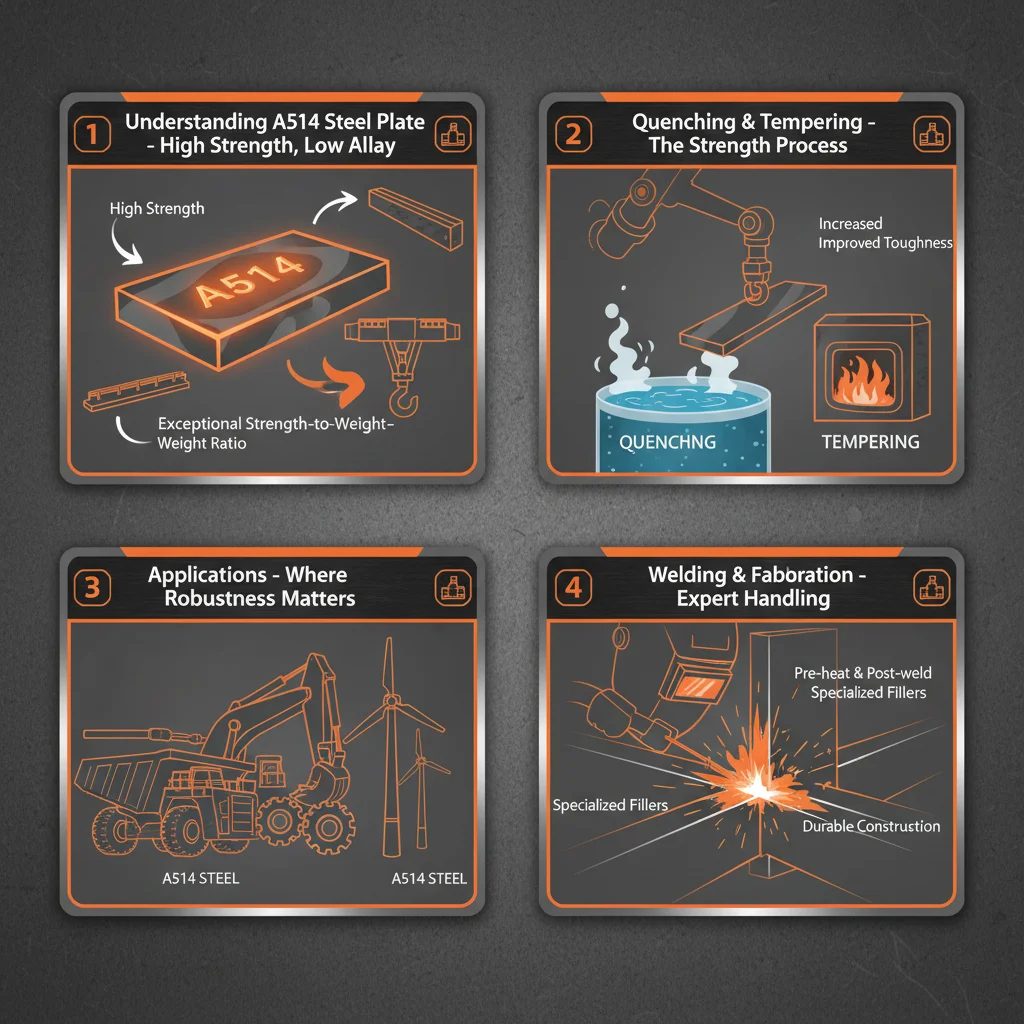
a633 steel, a high-strength low-alloy (HSLA) steel, plays a crucial role in modern infrastructure and construction. Its enhanced properties compared to conventional carbon steels make it ideal for applications demanding increased durability and weldability. The growing need for resilient infrastructure globally, coupled with a focus on cost-effective materials, fuels the demand for a633 steel. This steel offers a compelling balance of strength, toughness, and formability, making it a preferred choice in a wide range of projects.
The utilization of a633 steel is increasingly important as global construction booms, particularly in developing nations. According to the World Steel Association, global steel demand is projected to grow, and HSLA steels like a633 are positioned to meet this demand. This is driven by the need for structures capable of withstanding extreme weather events, seismic activity, and prolonged use. The development and refinement of a633 steel production techniques address challenges in material performance and consistency.
Understanding a633 steel's properties and applications is vital for engineers, architects, and construction professionals. Its benefits extend beyond structural integrity, encompassing lifecycle cost savings through reduced maintenance and repair. With growing focus on sustainable construction practices, a633 steel's longevity and potential for recyclability offer significant environmental advantages. The ongoing innovation in steel alloys ensures continued relevance and application of a633 steel in shaping the future of construction.
Defining a633 Steel and its Significance
a633 steel is a versatile high-strength low alloy (HSLA) steel, predominantly used in structural applications where enhanced performance is critical. Its designation, A633, refers to the American Society for Testing and Materials (ASTM) standard that defines its specifications. This steel is recognized for its excellent weldability, formability, and resistance to atmospheric corrosion, making it suitable for a diverse array of projects.
The significance of a633 steel stems from its ability to provide superior strength-to-weight ratios compared to conventional carbon steels. This leads to optimized designs, reduced material costs, and enhanced structural efficiency. In critical infrastructure projects, where safety and longevity are paramount, the use of a633 steel offers a robust and reliable solution.
Global Relevance of a633 Steel
The demand for a633 steel is intrinsically linked to global infrastructure development and the need for durable, cost-effective construction materials. Rapid urbanization in developing countries, particularly in Asia and Africa, drives the demand for steel in building bridges, highways, and high-rise structures. The United Nations estimates that over half of the world's population now lives in urban areas, highlighting the escalating need for resilient infrastructure.
Furthermore, the increasing frequency of extreme weather events, exacerbated by climate change, necessitates the use of materials capable of withstanding severe conditions. a633 steel, with its enhanced strength and corrosion resistance, offers a viable solution for constructing infrastructure capable of weathering such challenges. The International Organization for Standardization (ISO) promotes the use of standardized materials to ensure quality and consistency in global construction projects, further bolstering the adoption of a633 steel.
The growth in the renewable energy sector, particularly wind power, also contributes to the demand for a633 steel, as it is often used in the construction of wind turbine towers. This showcases a633 steel’s relevance not only in traditional construction but also in supporting a sustainable future.
The Chemical Composition of a633 Steel
a633 steel's performance is directly related to its specific chemical composition. This typically includes carbon (C) ranging from 0.05 to 0.25%, manganese (Mn) up to 1.50%, silicon (Si) up to 0.40%, and phosphorus (P) and sulfur (S) limited to 0.04% and 0.004% respectively. Trace elements like chromium, nickel, and vanadium are often added in varying proportions to tailor the steel's properties to specific applications.
The carbon content provides strength, while manganese improves hardenability and weldability. Silicon acts as a deoxidizer during steelmaking, enhancing its purity and mechanical properties. The controlled levels of phosphorus and sulfur minimize brittleness and improve ductility. The precise composition is tailored based on the required grade of a633 steel—different grades offer varying levels of strength and toughness.
The addition of alloying elements like chromium enhances corrosion resistance, while nickel improves toughness at low temperatures. Vanadium refines the grain structure, further increasing strength and durability. Understanding this chemical makeup is crucial for predicting a633 steel's behavior in diverse environments and applications.
Key Mechanical Properties of a633 Steel
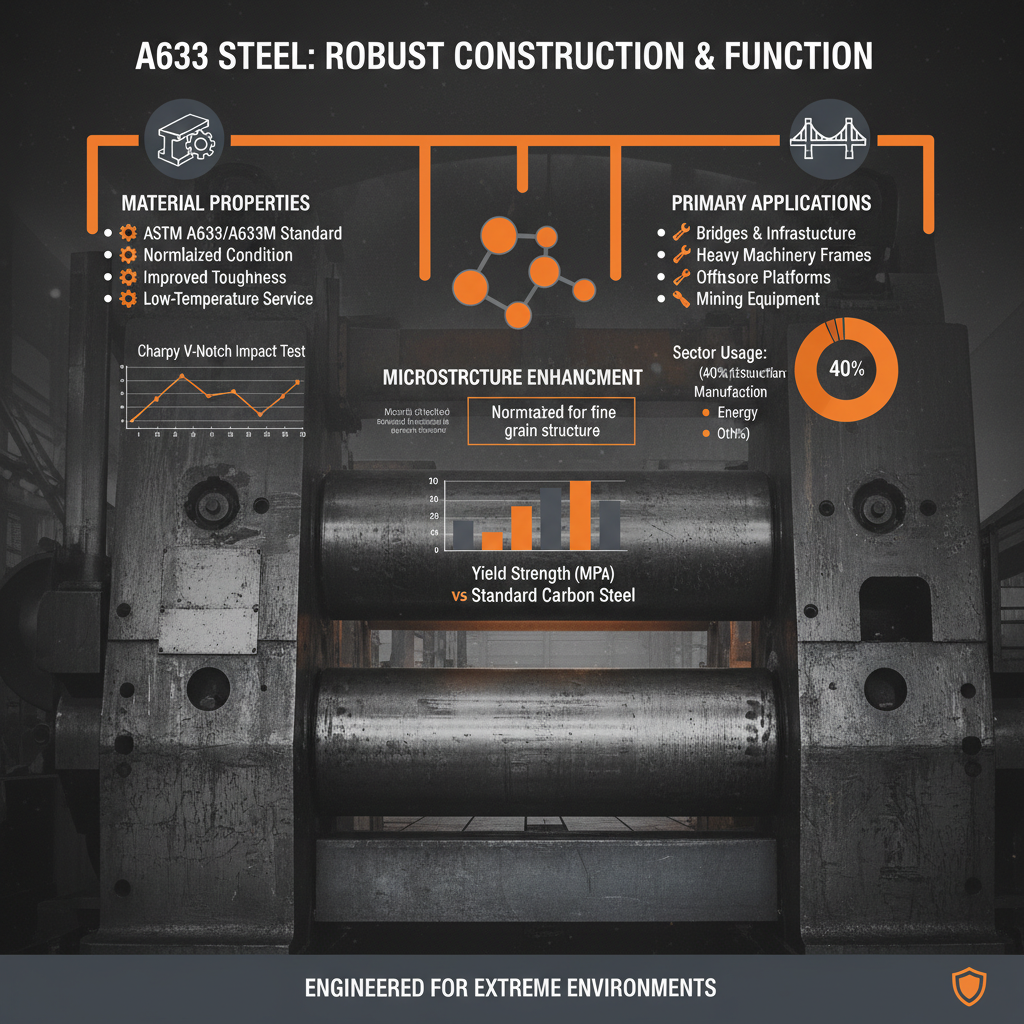
a633 steel exhibits a suite of mechanical properties that make it ideal for demanding structural applications. Its minimum yield strength typically ranges from 50 to 70 ksi (kilopounds per square inch), offering significant resistance to deformation under stress. The tensile strength, a measure of the steel's ability to withstand pulling forces, generally falls between 65 and 85 ksi.
Furthermore, a633 steel displays good ductility, enabling it to be formed and welded without fracturing. Its elongation, a measure of ductility, is usually around 18-22%. The Charpy V-notch impact test demonstrates the steel's toughness, indicating its resistance to brittle fracture, particularly at low temperatures.
a633 Steel Mechanical Property Comparison
Applications of a633 Steel in Diverse Industries
a633 steel finds widespread use in bridge construction, offering the necessary strength and durability to support heavy loads and withstand environmental stressors. Its weldability simplifies fabrication and assembly, reducing construction time and costs. It is frequently used in the fabrication of bridge girders, beams, and decking.
In the building construction sector, a633 steel is utilized in the construction of high-rise buildings, warehouses, and industrial facilities. It provides structural support for walls, floors, and roofs, ensuring the safety and stability of these structures. Its resistance to corrosion makes it suitable for exposed applications.
Advantages of Utilizing a633 Steel
One of the primary advantages of a633 steel is its cost-effectiveness. While offering superior performance, it remains competitively priced compared to other high-strength steel alloys. This makes it an attractive option for projects with budget constraints. Its weldability also reduces fabrication costs and speeds up construction timelines.
A633 steel’s exceptional durability translates to a longer service life, minimizing the need for frequent maintenance and repairs. This reduces lifecycle costs and enhances the long-term value of the structure. Moreover, a633 steel is readily recyclable, promoting sustainable construction practices and reducing environmental impact.
The enhanced safety provided by a633 steel is also a significant advantage. Its high strength and toughness minimize the risk of structural failure, protecting lives and assets. The reliability of this steel contributes to the overall integrity and longevity of the built environment.
Future Trends and Innovations in a633 Steel
Ongoing research focuses on optimizing the composition of a633 steel to further enhance its properties and reduce its environmental footprint. Development of new alloying techniques aims to improve strength, toughness, and corrosion resistance while minimizing the use of scarce or environmentally harmful elements. Digital twins are now helping to model behavior.
The integration of automation and digital technologies in steel production promises to improve quality control and efficiency. Advanced sensors and data analytics will enable real-time monitoring of the steelmaking process, ensuring consistent product quality and reducing waste. Machine learning algorithms may predict optimal compositions.
The adoption of sustainable manufacturing practices is another key trend. This includes reducing energy consumption, minimizing emissions, and maximizing the use of recycled materials. The development of ‘green steel’ technologies, utilizing hydrogen-based reduction processes, will further enhance the sustainability of a633 steel production.
Analysis of Factors Influencing a633 Steel Performance
| Alloying Element |
Impact on Strength |
Corrosion Resistance |
Weldability |
| Carbon |
8/10 (Significant Increase) |
3/10 (Decreases with higher content) |
6/10 (Moderate) |
| Manganese |
6/10 (Moderate Increase) |
5/10 (Slight Improvement) |
8/10 (Enhances) |
| Silicon |
4/10 (Slight Increase) |
6/10 (Moderate Improvement) |
7/10 (Good) |
| Chromium |
5/10 (Moderate Increase) |
9/10 (Significant Improvement) |
7/10 (Good) |
| Nickel |
7/10 (Enhances Toughness) |
7/10 (Improves) |
8/10 (Enhances) |
| Vanadium |
8/10 (Significant Increase) |
4/10 (Slight) |
6/10 (Moderate) |
FAQS
a633 steel is extensively used in bridge construction for fabricating essential components like bridge girders, beams, and decking. Its high strength and weldability make it ideal for supporting heavy loads and withstanding environmental stressors. The steel’s durability minimizes long-term maintenance costs, making it a cost-effective solution for bridge infrastructure. Its use ensures structural integrity and safety over the bridge's lifespan.
While a633 steel may have a slightly higher initial cost compared to conventional carbon steel, its superior strength-to-weight ratio and longer lifespan result in significant long-term cost savings. Reduced material usage, decreased maintenance requirements, and enhanced structural durability contribute to a lower lifecycle cost. Performance-wise, a633 steel consistently outperforms carbon steel in demanding applications.
a633 steel exhibits improved corrosion resistance compared to standard carbon steel, but it can still be susceptible to corrosion in harsh environments. Mitigation strategies include applying protective coatings like paints, galvanization, or epoxy coatings. The addition of alloying elements like chromium further enhances corrosion resistance. Proper design considerations, such as minimizing water accumulation, can also help prevent corrosion.
The typical yield strength range for a633 steel is between 50 and 70 ksi (kilopounds per square inch). This higher yield strength allows for the design of more efficient and lighter structures, reducing material consumption and construction costs. Engineers can utilize the increased strength to reduce member sizes while maintaining structural integrity. It’s crucial to consult specific ASTM standards for precise yield strength requirements.
The chemical composition of a633 steel is carefully controlled to ensure good weldability. Lower carbon equivalent values, achieved through controlled additions of manganese and other alloying elements, minimize the risk of weld cracking. Proper welding procedures and preheating are still necessary to achieve high-quality welds. The addition of nickel, for instance, can further improve weldability.
Steel production is energy-intensive and generates carbon emissions. However, the industry is actively investing in ‘green steel’ technologies, such as hydrogen-based reduction processes, to significantly reduce its carbon footprint. Furthermore, a633 steel is highly recyclable, contributing to a circular economy. Its long lifespan and reduced maintenance needs also minimize environmental impact over the structure’s lifecycle.
Conclusion
a633 steel stands as a cornerstone material in modern construction and infrastructure. Its combination of high strength, weldability, durability, and cost-effectiveness makes it an indispensable solution for a wide range of applications. From bridges and high-rise buildings to renewable energy infrastructure, a633 steel continues to shape the built environment. Its inherent properties and ongoing advancements ensure its continued relevance in meeting the evolving demands of a growing world.
Looking ahead, innovations in steel production, driven by sustainability concerns and digital technologies, will further enhance the performance and environmental profile of a633 steel. Embracing these advancements and promoting responsible material selection are crucial for creating resilient, sustainable, and safe infrastructure for future generations. To learn more about a633 steel and its applications, visit our website: www.baidysteel.com.